Book Printing Quote Checklist: What to Send, What to Check, What to Question
The specs that decide your price, a checklist to paste into your request, and how to read the quote that comes back before you sign it.
Quick answer
To get an accurate book printing quote, send the printer your trim size, exact page count, interior ink and paper, cover stock and finish, binding, three quantities, proof type, packing, delivery addresses and file status. Ask for every cost as a line item, including freight, overs and payment terms. Then compare quotes spec by spec, not by bottom line.
This guide is for anyone about to ask printers for prices: a first-time author, a small press comparing vendors, or a brand reprinting a journal. The one thing to know: a quote is only as accurate as the specs you send. Vague requests get vague prices, and the gap shows up later as change orders, freight bills and books that are not quite what you pictured.
Why the specs decide the price
A book printing quote is not just a price. IBPA's guide to reviewing estimates says the printer's response embodies all the specifications for the physical manufacture of your book and functions as a contract once you sign it. If a detail is missing from your request, the printer fills it with a default, and two printers will pick different defaults. That is one reason quotes for what looks like the same book can land far apart.
The fix is to send every printer the same written request for quote (RFQ). IBPA has published RFQ guidance for years, and the specs below follow it.
The specs every printer needs for an accurate quote
Trim size and binding edge
Give the finished size in inches, width first (6 x 9, 5.5 x 8.5, 8.5 x 11), and say which edge is bound. A landscape book bound on the short edge is a different job from a portrait one.
Page count
Give the total number of pages, not sheets, including blanks and roman-numbered front matter. IBPA's RFQ guide says to count all blank pages but not endpapers on hardbacks, and notes that offset printers prefer multiples of 32, 16 or 8 while digital printers accept most even page counts. PrintNinja notes that perfect-bound, saddle-stitched and case-bound interiors usually need multiples of four.
Interior ink
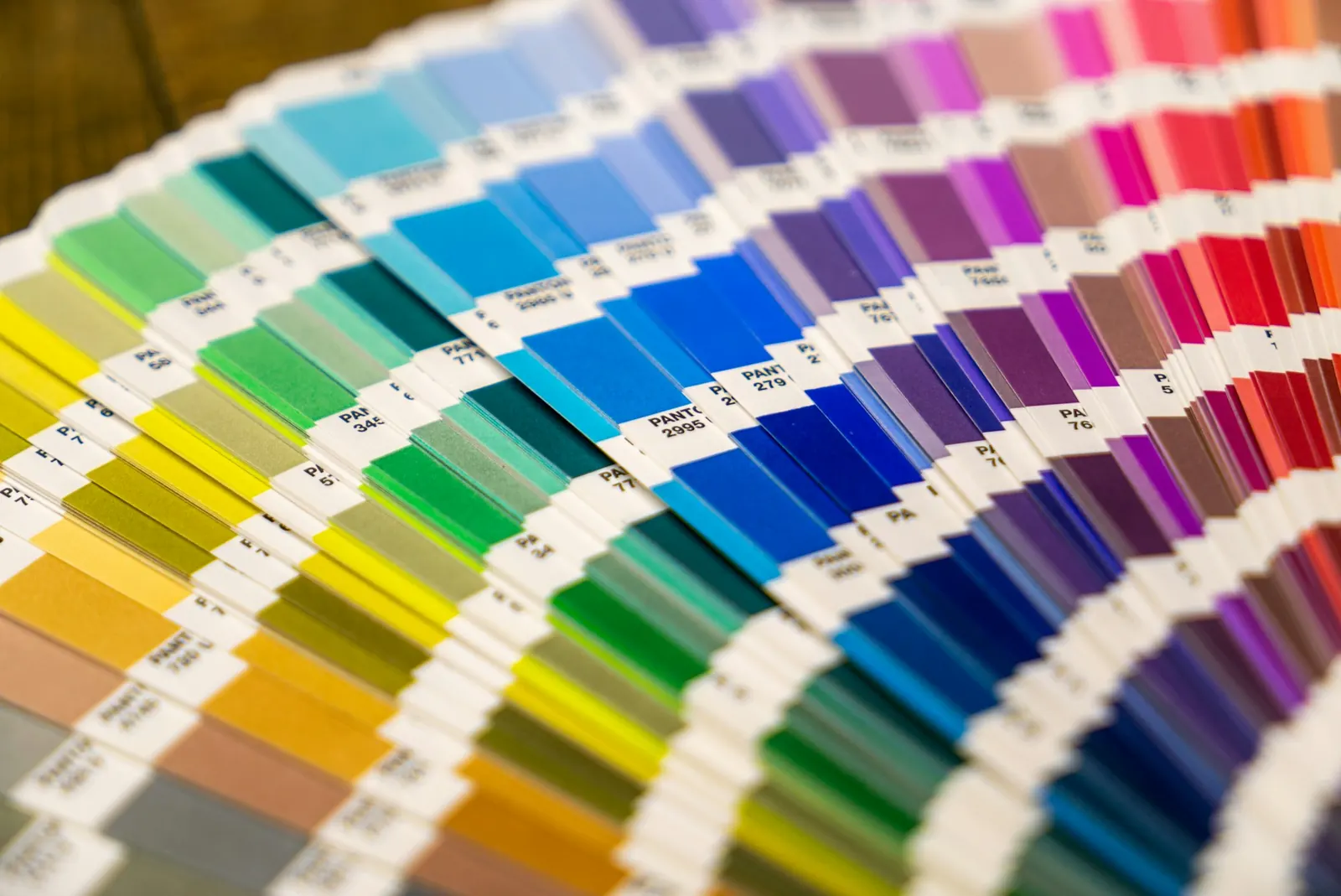
Black only, full color (four-color process), or black plus a spot color identified by its PMS number. If only some pages are in color, say how many and where they fall, since printers price that differently.
Interior paper
Weight (for example 50, 55, 60 or 70 lb text), shade (white or natural/cream) and finish (uncoated, or coated matte or gloss for photos). IBPA's sample spec reads "your house stock in natural, 55 or 60 lb. book, vellum finish," and adds a request for acid-free paper. Naming the printer's house stock is fine, as long as you name the weight and shade too.
Cover stock and finish
For paperbacks, the cover board weight (IBPA's example is 10 pt C1S, coated one side, with 12 pt suggested for larger or thicker books), how many sides print, and the finish: gloss or matte lamination, soft-touch, spot UV, foil. For hardcovers, list the case material, whether there is a dust jacket, endpaper color and any stamping. Special finishes are priced separately; see our guide to foil stamping a book cover.
Binding
Perfect bound (glued paperback), PUR bound, saddle stitched, coil or wire, case bound with adhesive or Smyth-sewn binding. IBPA's guide calls Smyth sewing the most durable hardcover option. More on paperbacks in our perfect bound book printing guide.
Quantity breaks
Always ask for at least three quantities. IBPA's sample RFQ asks for 1,000, 2,000 and 3,000; for short runs, 100, 250 and 500 might fit better. Quantity breaks show you where setup stops dominating the price, which is the number you need to plan reprints.
Proofs
Say whether you want a soft proof (PDF), a hard proof (printed copy) or both, and whether you want approval copies before the job ships. IBPA's printer checklist lists these choices and suggests asking for folded and gathered sheets (F&Gs) when time is short.
Packing
Carton strength, maximum carton weight, shrink-wrap and pallet requirements. IBPA's sample spec asks for shrink-wrapping in groups, packing in 275 lb burst-test cartons, and cartons of no more than 40 lb each. Its checklist also suggests a top liner so a box knife does not cut the top book.
Shipping destinations
Give the full delivery address and ZIP code for each destination, whether it has a loading dock, and whether you want to use your freight account or the printer's. IBPA notes books usually ship on pallets, and a liftgate truck may be needed without a dock. If part of the run goes to a warehouse or a fulfillment center, list it as a separate drop and ask whether there is a charge for each one.
ISBN and barcode
Tell the printer whether the ISBN barcode is already placed in your cover file or whether they need to add it, and give the ISBN and price if the barcode includes a price add-on.
File readiness
Say what you will supply (print-ready PDF is standard), whether images and bleeds are already set up, and whether you need help with preflight or file fixes. IBPA's example cover spec bleeds on all four sides with a 1/8 inch allowance. If files are not final, say so, because a quote based on 240 pages will change at 256.
Book printing quote checklist (copy and paste)
- Title, format, and your name and contact details
- Trim size (width x height, inches) and binding edge
- Total page count, including blanks and front matter
- Interior ink: black, full color, or black plus PMS spot color (number of color pages)
- Interior paper: weight, shade (white or cream), finish (uncoated, matte, gloss)
- Bleeds on interior pages: yes or no
- Cover stock (pt or lb), sides printed, ink
- Cover finish: gloss, matte or soft-touch lamination; spot UV; foil; embossing
- Hardcover only: case material, dust jacket, endpapers, stamping
- Binding: perfect, PUR, saddle stitch, coil, case bound (adhesive or sewn)
- Special finishes: sprayed or stained edges, ribbon, shrink-wrap of individual copies
- Quantities: three price breaks
- Proofs: soft proof, hard proof, approval copies or F&Gs
- Packing: carton strength, max carton weight, shrink-wrap groups, pallets
- Delivery: each address with ZIP, dock or liftgate, freight account
- ISBN and barcode: in file or to be added
- Files: print-ready PDF, delivery date of final files
- Required delivery date
- Request: itemized costs, freight estimate, overs/unders policy, payment terms, quote validity date
Book printing quotation format: what a good quote shows
A "quotation format" is simply the layout of the printer's reply. Whatever the template, a usable quotation restates your specs and breaks out the costs. IBPA's checklist suggests asking the printer to break out all costs into separate line items. Look for these lines:
| Line in the quote | What to check |
|---|---|
| Restated specs | Every spec matches your RFQ word for word |
| Unit price and total at each quantity | The math adds up; the quantities are the ones you asked for |
| Proofs | Type and number of proofs included, and the cost of extra rounds |
| Packing | Carton type and shrink-wrap match your request |
| Freight | An estimate to each address, or a clear note that it is excluded |
| Overs and unders | The percentage allowed and the price per over |
| Payment terms | Deposit, balance due date, accepted methods |
| Schedule | Production time from proof approval, and ship date |
| Validity | How long the price holds, and whether paper prices can change it |
How to compare book printing quotes apples to apples
Put every quote into one spreadsheet, one column per printer, one row per spec. Then:
- Check for silent changes. Joel Friedlander, writing for IBPA, found one quote that swapped in a different cover stock and a single-wall carton instead of the heavy-duty cartons he had asked for. Mark every mismatch and ask for a revised quote.
- Compare at the same quantity. A price at 1,000 copies cannot be compared with another at 1,100.
- Add freight. Friedlander's reminder: you have to pay freight too. Compare the delivered total, not the print price.
- Add overs. If a printer can ship and bill 10% more copies, include them in the worst-case total.
- Compare the schedule. A cheaper quote that arrives after your launch date is not cheaper.
- Divide by copies you expect to sell. Friedlander notes that a lower unit price at a higher quantity does not help if you cannot sell the extra copies.
For the published per-copy prices you can sanity-check a quote against, see how much it costs to print a book. If one quote is digital and another is offset, our offset vs digital printing guide explains why the prices diverge.
Overs and unders
Printing presses do not stop at an exact count, so book printing contracts allow some variance. IBPA's RFQ guide says the standard offset printing contract allows the printer to deliver and charge for up to 10% over your requested quantity, and Friedlander describes the same terms as up to 10% more or fewer books than you ordered.
The math matters. On an order of 1,000 copies with 10% overs and unders, you could receive anywhere from 900 to 1,100 books. In the sample quote Friedlander reviewed, overs were priced at $0.99 each, so 100 overs would add $99 to the bill. Ask how overs are priced: at a full unit price of $4.00, the same 100 overs would add $400.
If you need an exact minimum, put it in writing. When 1,000 copies are already promised to a buyer or crowdfunding backers, 900 is a problem. Ask the printer to quote "no fewer than 1,000" and state how overs above that will be billed.
Payment terms
Payment terms belong in the quote, not in a surprise invoice. IBPA's printer checklist lists "What are the printer's payment terms?" as a standard question, and its RFQ guide (first published in 2005) says most printers ask for one third to one half of the printing cost up front and the balance when the books are ready to ship, with repeat customers sometimes qualifying for a 30-day account. Print-on-demand author copies, by contrast, are paid at checkout like any online order.
Ask three things: how much is due at order, when the balance is due (before shipping or on delivery), and what happens to the deposit if the job is canceled after proof.
Red flags in a book printing quote
- The quote restates fewer specs than you sent, or uses vague terms like "standard paper" with no weight or shade.
- Freight is missing, or marked "to be determined" with no estimate.
- No mention of proofs, or proof rounds billed at an unstated price.
- Overs billed at the full unit price with no cap.
- No production schedule, or a schedule that starts before you have seen a proof.
- No expiry date, or a clause that lets the price change for paper costs without notice.
- A total that is far below every other quote for the same specs. Ask what is different.
Booklet printing quotes
Booklets (programs, workbooks, zines) need a few extra specs. Say whether the booklet is self-cover (the cover is on the same paper as the inside pages) or plus-cover (a heavier separate cover), and confirm the page count is a multiple of four for saddle stitching. Thick booklets may need perfect binding instead, so ask the printer for its limit on your paper weight. For a sense of scale, PrintNinja lists an 8.5x11, 48-page saddle-stitched book on 70 lb uncoated paper at $4.28 per copy for 500 and $2.44 for 1,000, as of November 2, 2026, excluding shipping, tax and duties.
Online book printing quotes and calculators
For standard paperbacks and hardcovers, an online calculator gets you a firm number in minutes. Amazon KDP, IngramSpark and Lulu publish calculators, and many short-run and offset printers, including DiggyPOD and PrintNinja, offer instant online quotes. A book printing cost calculator is ideal for testing page counts and quantities before you write the RFQ.
Ask for a custom quote when the book has anything a calculator cannot express: an unusual trim, specialty paper, sprayed edges, foil, multiple delivery addresses, or printing and fulfillment together. MT Print USA prints books in the United States and can store and ship them after printing. Request a quote with the checklist above and you will get a price based on your exact specs.
Frequently asked questions
What information do I need for a book printing quote?
Trim size, total page count, interior ink and paper, cover stock and finish, binding, quantities, proof type, packing, delivery addresses and file status. Send the same list to every printer so the quotes compare cleanly.
Can I get a book printing quote online?
Yes. KDP, IngramSpark and Lulu publish calculators, and many printers offer instant online quotes for standard books. Special trims, papers, finishes or multiple delivery addresses usually need a custom quote.
What should a book printing quotation include?
It should restate your specs, show unit and total prices at each quantity, and list proofs, packing, freight, overs and unders, payment terms, schedule and how long the price is valid. Ask for costs as separate line items.
What are overs and unders in book printing?
They are the allowed variance between the copies you order and the copies delivered. IBPA describes the standard as up to 10% more or fewer, billed or credited accordingly, unless you negotiate otherwise.
How much deposit do book printers ask for?
According to IBPA's RFQ guidance, most printers ask for one third to one half of the printing cost up front and the balance when books are ready to ship. Print-on-demand author copies are paid at checkout.
What is different about a booklet printing quote?
Say whether it is self-cover or plus-cover, confirm a page count in multiples of four for saddle stitching, and ask the printer's page limit for your paper weight.
Sources
- IBPA PubSpot: What to Put in Your RFQ
- IBPA PubSpot: Printer Checklist and Shipping Questions to Ask
- IBPA PubSpot: Managing Book Printing Estimates, Part 3: Assess What the Printer Is Promising
- PrintNinja: How To Count Internal Pages For Book Printing
- PrintNinja: Coloring Book Printing (price examples)
- Amazon KDP: Paperback Printing Cost
- IngramSpark: Pricing
- Lulu: Pricing Calculator
- DiggyPOD: Book Printing Price and Cost